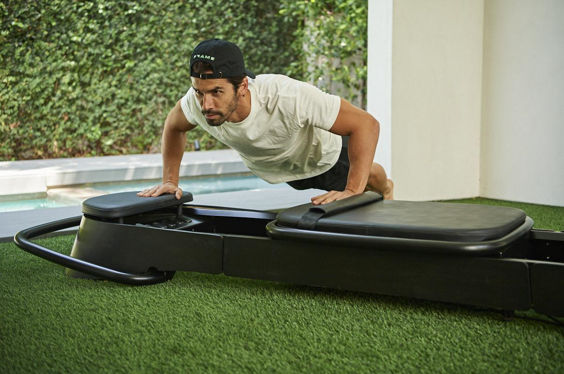
Choosing a home Pilates machine is easier when you start with the room rather than the equipment catalogue. A reformer may look compact in a product photograph, but your workout area needs enough clearance for mounting, dismounting, adjusting the footbar, handling straps, and moving through different exercises.
The right setup also depends on your experience and how you expect to use the equipment. A beginner who wants a few sessions each week may need something straightforward and easy to maintain. Someone already familiar with reformer Pilates may place more value on adjustment options, resistance variety, accessories, and long term durability.
A home Pilates machine should fit naturally into your space and your routine. Before buying, consider the dimensions, resistance system, carriage, footbar, user capacity, storage, construction, and the type of workouts you want to perform.
Start by Measuring Your Workout Area
The first step is surprisingly simple: measure the space where you intend to exercise.
Do not measure only the floor area occupied by the machine. You need additional clearance around the equipment because many exercises require movement beyond the carriage.
Consider the following:
- Length and width of the machine
- Space at both ends
- Clearance on either side
- Room needed to get on and off
- Space for straps and accessories
- Furniture that may interfere with movement
- Storage area when the machine is not being used
A reformer placed too close to a wall can make certain exercises awkward. Furniture positioned beside the machine can also restrict arm or leg movement.
If the machine will be used in a bedroom or living room, think about how the space functions outside of workouts. A permanent setup may work well in a dedicated fitness room, while a foldable or movable design may be more practical in a shared space.
See also: What a Sauna Heater Costs to Run Each Month
Decide Where the Machine Will Stay
Your storage plan should be decided before purchasing.
Some people have enough room to keep the equipment permanently assembled. Others need to put it away after each session.
Permanent placement has one obvious advantage: the machine is ready whenever you want to exercise. There is no assembly or moving furniture involved.
A machine that needs to be stored after every session requires more planning. Check its weight, folded dimensions, wheels, handles, and storage orientation.
Do not assume that a machine described as compact will be easy to move. A smaller frame can still be heavy, and the storage position may require more vertical or horizontal clearance than expected.
Understand the Different Parts
Before comparing machines, it helps to know what you are actually evaluating.
A typical reformer includes a frame, moving carriage, springs, footbar, shoulder rests, ropes or straps, and headrest. Some models include additional equipment for a wider range of exercises.
Each component affects how the machine feels during use.
The carriage is the moving platform. It should travel smoothly along the frame.
The springs provide resistance and can usually be changed depending on the exercise.
The footbar gives your feet or hands a stable point of contact during many movements.
The shoulder rests help position the body while lying on the carriage.
The straps or ropes allow additional resistance based exercises involving the arms and legs.
Knowing these parts makes it easier to understand product specifications rather than choosing based on appearance alone.
Look at the Resistance Options
Resistance is one of the most important features of a reformer.
Most traditional reformers use springs, although the specific spring system can differ between models. The number, strength, and arrangement of springs influence the resistance available during exercises.
A useful machine should allow you to adjust resistance according to the movement.
For example, a leg exercise may require a different resistance level from an arm exercise. A beginner may also need a different setting from someone who has been practicing for several years.
More resistance does not automatically mean a better workout.
If the resistance is too high, you may compensate by using momentum or changing your alignment. If it is too low, you may not receive enough support or challenge for the intended movement.
The better choice is a machine that provides a useful range of settings and makes those settings easy to change.
Check the Carriage Quality
The carriage is the part of the machine you will interact with throughout most workouts.
Look for a carriage that feels stable and moves smoothly along the frame. Excessive noise, wobbling, or inconsistent movement can make controlled exercises more difficult.
The carriage should also provide enough surface area for comfortable positioning.
Padding matters as well. You may spend significant portions of a workout lying or sitting on the carriage, so comfort can affect how consistently you use the equipment.
Check whether the headrest can be adjusted and whether the shoulder rests are positioned appropriately for your body.
If possible, try the machine before purchasing. A product description cannot always communicate how the carriage actually feels during movement.
Consider the Footbar
The footbar is involved in numerous reformer exercises, so its design deserves attention.
An adjustable footbar can accommodate different body proportions and exercise positions. Look at how the footbar changes position and whether the adjustment mechanism feels secure.
A good adjustment system should be easy to understand without being loose or unstable.
Check:
- Number of available positions
- Adjustment range
- Locking mechanism
- Padding
- Stability during exercise
- Ease of switching between positions
If more than one person will use the machine, adjustability becomes even more useful because each person may need a different setup.
Think About Your Height
Body proportions can influence how comfortable a reformer feels.
A taller person may need a longer carriage or additional adjustment range. Someone with a shorter frame may have different requirements for the footbar and straps.
Compact machines can be attractive when space is limited, but compact dimensions may affect the amount of room available for certain movements.
Check the manufacturer’s recommended user height range where available.
If your height falls outside the stated range, contact the manufacturer before purchasing. Do not assume that you can simply adjust the machine enough to make it comfortable.
Check the Maximum User Weight
Every machine should have a stated user weight capacity.
This specification should be treated as a basic safety and suitability requirement rather than an optional detail.
If the equipment will be shared, use the specifications for everyone who plans to train on it.
Also consider the way the machine is constructed. A stable frame and suitable support system matter when the carriage is moving and resistance is changing.
Always follow the manufacturer’s instructions for assembly and use.
Examine the Frame and Base
A stable frame supports controlled movement.
The reformer should sit securely on the floor without excessive rocking or shifting. This becomes particularly noticeable during exercises where you apply force through the feet or hands.
Look at the frame material, base design, feet, and overall construction.
If you are placing the equipment on a hard floor, check whether the manufacturer recommends a protective mat. This can help protect the floor and provide additional stability depending on the surface.
Avoid placing the machine on an uneven area.
Consider Noise
Noise may not be a major issue in a dedicated workout room, but it can matter in apartments or shared homes.
Carriage movement, wheels, springs, and other components can produce different levels of sound.
If you plan to exercise early in the morning or late at night, look for information about noise and carriage movement. A smoother mechanism can make the workout more comfortable for you and less disruptive to others.
A soft protective mat beneath the machine may also help reduce vibration, depending on the flooring and equipment design.
Decide Which Accessories You Actually Need
Some machines can be used with additional accessories, but not everyone needs a large collection of equipment.
Depending on the model, accessories may include:
- Pilates box
- Jump board
- Additional springs
- Different straps
- Mat conversion equipment
- Tower components
- Handles
Think about your intended exercises before paying extra for accessories.
If you are new to reformer Pilates, learning foundational movements may be more valuable than buying every available attachment.
You can always add compatible accessories later if your training develops in that direction.
Think About Maintenance
A home machine needs regular care.
Before buying, find out what maintenance the manufacturer recommends and whether replacement parts are available.
Pay attention to:
- Springs
- Ropes
- Straps
- Wheels
- Bearings
- Footbar hardware
- Carriage components
Keep the equipment clean and inspect adjustable parts regularly.
If a rope becomes worn or a spring shows visible damage, do not continue using the equipment until the issue has been addressed according to the manufacturer’s guidance.
Maintenance information is particularly important when buying equipment that you expect to use for several years.
Consider Assembly
Some home reformers arrive mostly assembled, while others require more extensive setup.
Check what is included with the purchase and whether additional tools are needed.
If assembly is required, consider the weight and size of the package. You may need another person to safely position the frame or carriage during installation.
After assembly, verify that all components are secure before using the machine.
Do not improvise with missing hardware or make structural modifications that are not approved by the manufacturer.
Match the Machine to Your Experience
Your Pilates experience should influence your choice.
For beginners
A beginner may benefit from:
- Straightforward spring adjustments
- Stable construction
- Comfortable carriage padding
- Clear setup instructions
- Basic accessories
- Easy footbar adjustment
The goal is to learn the fundamentals without making the equipment unnecessarily complicated.
For experienced users
An experienced practitioner may want:
- Greater resistance flexibility
- More adjustment positions
- Additional accessories
- More exercise options
- A carriage suited to their body proportions
- A construction designed for frequent use
There is no need to buy advanced equipment simply because you are new to Pilates. Choose features that you can actually use.
Think About How Often You Will Exercise
Your expected workout frequency can help determine how much you should prioritize durability and convenience.
Someone planning occasional sessions may value simple storage and easy setup.
Someone expecting to train several times each week may place more importance on carriage quality, spring durability, comfort, adjustment mechanisms, and maintenance.
Think about your actual routine rather than an idealized one.
If you know that you only have 30 minutes available after work, a machine that takes significant effort to prepare may discourage you from exercising. A setup that is ready to use can make a practical difference.
Compare the Total Cost
The purchase price is only one part of the cost.
Consider whether you may need:
- Delivery
- Assembly
- Protective flooring
- Accessories
- Replacement parts
- Maintenance
- Storage equipment
A lower priced machine can become more expensive if it requires accessories you expected to be included.
On the other hand, paying more for features you will never use does not necessarily provide better value.
Make a list of the features you actually need and compare machines against that list.
Consider Warranty and Support
A home Pilates machine contains moving components, so manufacturer support can be useful.
Review the warranty terms before purchasing. Check what components are covered, how long coverage lasts, and whether replacement parts are available.
Also look at the manufacturer’s instructions and customer support options.
Clear documentation can make a difference when you need to adjust the machine or troubleshoot a problem.
Do not assume that every component has identical warranty coverage.
Test the Machine Before Buying When Possible
If you have access to a showroom, studio, or retailer where you can try different machines, use that opportunity.
Pay attention to how the carriage moves.
Check whether the footbar feels stable.
Try adjusting the springs.
See whether the carriage is comfortable for your body.
Notice how easy it is to reach the straps and make adjustments.
Five minutes of testing can reveal things that product photographs cannot.
If testing is not possible, read the manufacturer’s specifications carefully and look for detailed demonstrations of the equipment being used.
Avoid Choosing Based Only on Appearance
A sleek machine can look excellent in a home gym, but appearance tells you very little about how it will perform.
Prioritize function.
Ask:
- Does it fit the room?
- Is it suitable for my height?
- Does it provide enough resistance adjustment?
- Is the carriage comfortable?
- Is the footbar adjustable?
- Can I store it conveniently?
- Can I obtain replacement parts?
- Is it appropriate for my experience level?
- Will I actually use it regularly?
These questions provide a better basis for comparison than color, styling, or the number of promotional features listed on a product page.
Learn the Basics Before Training Independently
A home Pilates machine can be used by beginners, but learning the equipment properly is important.
An instructor can show you how to mount and dismount safely, adjust the springs, position the footbar, use the straps, and maintain appropriate alignment.
Once you understand the fundamentals, independent workouts become easier to manage.
Do not begin with advanced movements simply because they are available online. Start with exercises that allow you to understand the carriage and resistance system.
People with injuries, medical conditions, pregnancy related considerations, or specific physical limitations should obtain appropriate professional guidance before starting or changing an exercise routine.
Create a Practical Home Workout Area
The machine is only one part of the setup.
Keep water nearby, but position it where it cannot interfere with movement. Store accessories in a location that is easy to reach without cluttering the workout area.
Good lighting can make it easier to monitor your positioning.
A mirror may also help you observe alignment, although it should not replace instruction from a qualified professional.
Keep electrical cables, furniture, pets, and other potential obstacles away from the active workout area.
A simple and organized environment makes it easier to start a session without spending several minutes preparing the room.
Build Your Routine Gradually
Once your machine is installed, resist the urge to use every feature immediately.
Start with familiar foundational exercises and focus on learning the equipment.
You can gradually increase:
- Exercise variety
- Movement range
- Repetition count
- Resistance
- Coordination
- Session duration
Change one factor at a time when possible.
For example, if you increase spring resistance, keep the exercise itself familiar. If you introduce a new movement, use a manageable resistance level.
This approach makes it easier to identify what is working and where your technique needs attention.
FAQ
What should I look for in a home Pilates machine?
Start with dimensions, available workout space, resistance options, carriage movement, footbar adjustability, user capacity, construction, storage, accessories, maintenance requirements, and warranty coverage.
Is a home Pilates machine suitable for beginners?
Yes. Beginners should start with foundational movements and learn proper equipment setup and technique before progressing to more demanding exercises.
How much space does a home Pilates machine require?
The exact space varies by model. Measure the machine’s operating dimensions and leave additional clearance around it for mounting, dismounting, straps, and exercises that extend beyond the carriage.
Is a foldable Pilates machine better for a small home?
A foldable model can be useful when floor space is limited, but check both its operating and folded dimensions. Also consider its weight and how easily it can be moved.
How important is the resistance system?
It is one of the most important features because resistance affects how exercises feel and how they can be modified. A useful machine should provide adjustable resistance suitable for different movements and experience levels.
Should I buy a machine with lots of accessories?
Not necessarily. Choose accessories based on the exercises you plan to perform. Beginners may not need an extensive collection of attachments.
How do I know whether a reformer will fit my height?
Check the manufacturer’s recommended user height range and carriage dimensions. If your height falls outside the stated range, contact the manufacturer before purchasing.
How often should a home Pilates machine be maintained?
Follow the manufacturer’s maintenance schedule. Regularly inspect springs, ropes, straps, wheels, and adjustable components, and address visible wear before continuing to use the equipment.