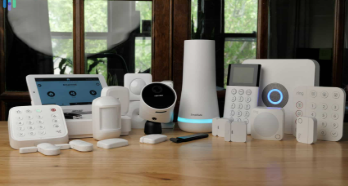
Technology-driven home security blends proactive risk management with autonomous control. It relies on continuous sensor fusion, adaptive access, and rapid threat assessment to balance safety with privacy. A baseline framework reveals gaps, guiding cost-efficient enhancements and independent audits for clarity. Platform interoperability, cross-vendor privacy guarantees, and transparent governance shape trustworthy monitoring. Sustained vigilance and verifiable workflows offer scalable protection, yet the path forward presents choices that merit careful consideration. The next step invites closer examination of these trade-offs.
How Tech Elevates Everyday Home Security
Smart home technology modernizes security by shifting from reactive alarms to proactive risk management. The approach analyzes vulnerabilities, integrating wireless sensors and facial recognition as core capabilities. This framework enables continuous visibility, adaptive access, and rapid threat assessment, while preserving user autonomy. By combining data-driven alerts with contextual insights, it supports strategic decisions and scalable protection across evolving domestic environments.
Assessing Your Home’s Security Baseline
Building on the proactive framework described previously, this section establishes a measured starting point for security assessment.
A structured baseline reveals privacy gaps and evaluates user authentication across devices, networks, and apps.
The approach is analytical and strategic, prioritizing clarity over jargon.
It emphasizes freedom through verifiable benchmarks, independent audits, and continuous monitoring to inform targeted, cost-efficient enhancements.
Pick the Right Smart System: Platform, Devices, and Privacy
Choosing the right smart system requires a structured comparison of platform ecosystems, device capabilities, and privacy guarantees to align with a user’s risk tolerance and budget.
The analysis emphasizes privacy considerations and robust device interoperability, evaluating cross‑vendor compatibility, update cadence, and data governance.
Strategic selection prioritizes controllable privacy, scalable integration, and clear ownership boundaries for freedom‑driven independence.
Maximize Protection With Smart Monitoring and Alerts
Maximize protection with smart monitoring and alerts hinges on precise sensor fusion, timely notifications, and verifiable response workflows. Analytical systems synthesize diverse inputs to reduce false alarms while preserving user autonomy. Strategic architectures balance rapid action with user control, ensuring transparency and auditability. Privacy implications and data ownership considerations shape trust, guiding design choices toward freedom, accountability, and durable resilience.
See also: Home Technology Innovations
Frequently Asked Questions
How Much Does Home Security Technology Cost on Average?
Average home security technology costs roughly $20–50 monthly for monitoring plus initial equipment ranging from $200–1,500, varying by system. The analysis emphasizes cost comparison and privacy considerations, with strategic pacing for audiences seeking freedom.
Do Smart Cameras Require a Constant Internet Connection?
A notable 60% of households rely on internet-connected security by default; smart cameras require internet dependency for live alerts, cloud storage, and updates, raising privacy concerns despite data encryption and subscription value considerations.
Can Neighbors Access My Security Footage Securely?
Neighbors should not access footage if proper safeguards are in place; encryption and access controls matter. If privacy leakage occurs, isolate cameras via network segmentation, audit logs, and least-privilege sharing to preserve freedom while minimizing risk.
Which Features Justify Subscription Fees or Cloud Storage?
The features justifying subscription fees or cloud storage include advanced analytics, reliable archival durations, and seamless updates, with security pricing tied to data privacy safeguards, encryption, and access controls; this appeals to freedom-seeking users prioritizing controlled, strategic data stewardship.
How Do I Verify a Device’s Data Privacy Practices?
Verifying privacy practices requires a rigorous security assessment; juxtaposed with vendor transparency, it reveals gaps. The approach examines data handling ethics, audits consent, and maps data flows, empowering freedom-minded users to demand accountable privacy commitments and ongoing diligence.
Conclusion
In evaluating home security through technology, the balance between proactive protection and privacy emerges as the defining strategic challenge. An integrated approach—continuous sensor fusion, adaptive access, and transparent governance—yields scalable risk reduction while preserving user autonomy. Example: a hypothetical neighborhood uses interoperable cameras and smart locks, governed by independent audits, to rapidly identify anomalies without exposing data beyond consented purposes. This analytic, innovative framework demonstrates that security gains hinge on verifiable workflows and privacy-first design embedded in every layer.